
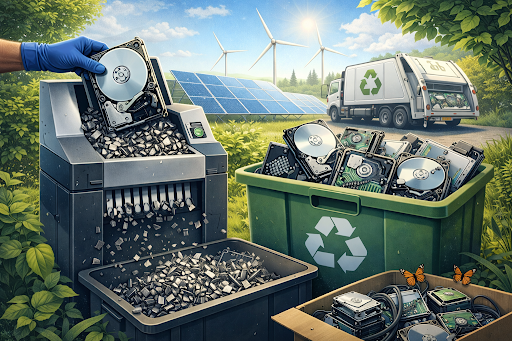

Data security and environmental sustainability go hand in hand in a digital-driven world. Whether it’s a multinational corporation or a small business, protecting confidential information from misuse is as important as disposing of electronic waste responsibly.
This is where hard disk data destruction becomes a crucial process ensuring that sensitive data is permanently erased while minimizing environmental harm.
Understanding the Need for Secure Hard Disk Data Destruction
Every organization stores vast amounts of data on hard drives financial information, customer details, business plans, and employee records. When these drives reach the end of their lifespan, simply deleting files or formatting them isn’t enough.
Skilled individuals can still recover deleted data using advanced recovery tools. That’s why data destruction for the hard disk involves specialized methods that guarantee total elimination of stored information.
Moreover, with growing environmental concerns, companies are now focusing on eco-friendly methods of hard disk destroying that not only protect data but also prevent hazardous materials from entering the ecosystem.
Methods of Hard Disk Data Destruction
Understanding the major approaches to hard disk data destruction helps businesses choose the safest, most eco-friendly, and compliant method suited to their operational needs. Below are the most effective and trusted techniques used today:
- Degaussing: Degaussing uses powerful magnetic fields to disrupt the magnetic structure of a hard disk’s platters. This process ensures that the stored data becomes unreadable. However, degaussing completely destroys the drive’s functionality, making it unusable afterward.
- Physical Destruction: Physical hard disk destroying methods involve shredding, crushing, or drilling through the disk. Specialized shredding machines break hard drives into tiny fragments, ensuring complete data eradication. While this method is fast and efficient, it’s essential that the destroyed components are properly recycled to avoid environmental pollution.
- Data Wiping: This method involves overwriting data with random characters or patterns multiple times. Though slower, data wiping is suitable when drives need to be reused or resold. Certified data wiping ensures that no data recovery tool can restore the information.
- Thermal Destruction: High-temperature incineration melts and disintegrates the drive’s internal components. While this process guarantees complete destruction, it must be performed under controlled conditions to avoid releasing toxic substances.
By applying these hard disk data destruction methods correctly, businesses can protect their confidential data and contribute to a more sustainable digital ecosystem.
Why Eco-Friendly Destruction Matters
Traditional hard disk destroying practices often lead to e-waste pollution, releasing hazardous elements like lead, mercury, and cadmium into the environment. By adopting environmentally responsible destruction techniques, companies not only safeguard their data but also contribute to global sustainability efforts.
An eco-conscious recycling approach involves sorting and segregating dismantled components so that metals, plastics, and electronic parts can be reused. This reduces the need for new raw materials, conserves energy, and minimizes landfill waste.
Choosing a Certified Data Destruction Partner
Selecting a reliable partner for data destruction for the hard disk ensures compliance with data protection regulations and environmental standards. Here’s what to look for:
- Certifications and Compliance: Choose a service provider certified under ISO 9001 or recognized by local environmental authorities. This ensures adherence to quality and safety standards.
- Secure Chain of Custody: A trustworthy company should offer complete traceability, from collection to final destruction, with documentation and certificates verifying the process.
- Modern Equipment: Advanced shredders, degaussers, and data wiping tools enhance the reliability of destruction.
- Transparency: A reputable firm provides destruction reports, photos, or videos of the process for accountability.
- Environmental Responsibility: Look for partners who follow sustainable recycling practices and dispose of hazardous waste responsibly.
Steps to Implement Safe Data Destruction in Your Organization
A clear strategy promotes compliance, security, and sustainability across all levels of your business operations. Follow these key steps to execute data destruction efficiently and responsibly:
- Data Audit: Identify all electronic devices containing sensitive data. This includes desktops, laptops, servers, and backup drives.
- Define Data Retention Policies: Determine what data needs to be retained and what can be securely destroyed.
- Establish Secure Storage: Before destruction, store devices in a secure location to prevent unauthorized access.
- Select the Right Method: Depending on your requirements reuse or complete disposal choose between data wiping, degaussing, or physical destruction.
- Document Everything: Maintain detailed records of the destruction process, including serial numbers and certificates, for compliance purposes.
- Recycle Responsibly: Ensure that dismantled materials are sent for proper recycling instead of being dumped as waste.
Taking these proactive measures ensures your organization practices safe and eco-conscious hard disk data destruction, protecting both digital assets and the environment for a sustainable future.
Benefits of Professional Hard Disk Data Destruction
Here are the key benefits businesses can gain from trusted destruction services:
- Data Security: Eliminates the risk of information breaches or identity theft.
- Regulatory Compliance: Meets GDPR and other data protection laws.
- Environmental Protection: Encourages responsible e-waste disposal.
- Corporate Reputation: Demonstrates commitment to sustainability and information integrity.
- Cost Efficiency: Reduces potential penalties and data recovery risks.
By understanding these benefits, organizations can make informed decisions about hard disk data destruction, strengthening both their data protection strategies and sustainability initiatives for long-term success.
Common Mistakes to Avoid
To ensure complete security and sustainability, here are some of the most common mistakes you should always avoid:
- Relying on Basic Deletion: Merely deleting files doesn’t remove them permanently.
- Improper Storage Before Destruction: Unsecured storage can lead to data leaks.
- Ignoring Certifications: Always verify a provider’s credentials before hiring.
- Skipping Documentation: Lack of proof can create compliance issues.
- Neglecting Recycling: Uncontrolled disposal can cause environmental damage.
By recognizing and preventing these common mistakes, businesses can ensure complete data destruction for the hard disk, protect confidential information, and maintain environmental responsibility effortlessly.
Final Thoughts
As data continues to be the backbone of every organization, ensuring its secure and sustainable destruction is non-negotiable. By following best practices for data destruction for the hard disk and choosing eco-friendly solutions, companies can protect both their reputation and the planet.
Planet Green Recycling offers professional and environmentally responsible hard disk data destruction services in Dubai. With certified processes, advanced technology, and a commitment to sustainability, they ensure complete data safety and responsible recycling.
Businesses can rely on their secure solutions to protect sensitive information while supporting a greener world.
