
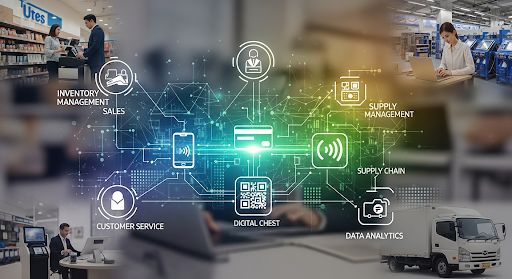
In today’s fast-paced commercial environment, digital payment solutions have moved beyond convenience to become a foundational element of business operations. From retail counters and e-commerce checkouts to service subscriptions and government platforms, the way money moves now directly influences efficiency, trust, and scalability. Businesses that adopt modern payment systems are better positioned to meet customer expectations, streamline internal workflows, and respond to evolving market demands.
As organisations grow more interconnected and consumers increasingly favour cashless interactions, digital payments have become integral to daily operations rather than an optional upgrade.
Understanding Digital Payments in a Business Context
Digital payments refer to financial transactions completed electronically without the exchange of physical cash. These transactions take place through online banking platforms, mobile wallets, payment gateways, QR codes, and card-based systems. What distinguishes digital payments is not just speed, but their ability to integrate seamlessly into broader operational ecosystems.
For businesses, this integration means that payments are no longer isolated financial events. They connect directly with inventory management, accounting systems, customer relationship tools, and data analytics platforms, allowing organisations to operate with greater visibility and control.
How Digital Payment Systems Function
At a high level, a digital payment transaction involves several coordinated participants. The process begins when a customer selects a product or service and initiates payment through a chosen method. The merchant’s system then transmits this request to a payment processor, which verifies the transaction details and communicates with relevant financial institutions.
Once authorised, funds are transferred securely from the customer’s account to the merchant’s account, and confirmation is issued to both parties. While this entire process occurs in seconds, it relies on advanced infrastructure, encryption protocols, and compliance frameworks to ensure accuracy and security.
Operational Efficiency Through Digital Payments
One of the most significant contributions of digital payments is operational efficiency. Manual cash handling requires reconciliation, storage, and physical security, all of which introduce cost and risk. Digital transactions, by contrast, are automatically recorded and categorised, reducing administrative workload and human error.
Automated payment records simplify accounting, improve audit readiness, and provide real-time insights into cash flow. For businesses managing multiple locations or channels, this centralised visibility enables more informed decision-making and faster financial reporting.
Enhancing Customer Experience and Retention
Payment experience plays a critical role in customer satisfaction. Long queues, limited payment options, or failed transactions can undermine otherwise strong products or services. Digital payments offer flexibility by allowing customers to choose how and when they pay, whether through cards, mobile apps, or online transfers.
A smooth checkout process reduces friction and increases the likelihood of repeat engagement. Over time, consistent payment experiences build trust, which is essential for long-term customer relationships in both B2C and B2B environments.
Security and Risk Management Considerations
Security remains a central concern in any payment environment. Modern digital payment systems incorporate multiple layers of protection, including encryption, tokenisation, and multi-factor authentication. These measures ensure that sensitive financial information is protected during transmission and storage.
From a business perspective, strong security protocols reduce exposure to fraud, chargebacks, and data breaches. They also support compliance with regulatory standards related to data protection and financial transparency, which are increasingly important across global markets.
Supporting Business Scalability and Growth
As businesses expand, payment systems must scale alongside operations. Digital payments enable organisations to process higher transaction volumes without proportional increases in operational cost. They also support cross-border transactions, multi-currency settlements, and subscription-based billing models.
This flexibility is particularly valuable for businesses entering new markets or transitioning from offline to online models. A well-implemented digital payment infrastructure allows growth without disrupting existing processes or customer relationships.
Challenges and Strategic Considerations
Despite their advantages, digital payment systems require careful planning. Businesses must navigate regulatory requirements, manage technology integration, and stay ahead of evolving security threats. System downtime, compatibility issues, or poor user experience can offset potential benefits if not addressed proactively.
Selecting the right payment partners, investing in staff training, and regularly reviewing system performance are essential steps in maintaining reliable payment operations. A strategic approach ensures that digital payments enhance, rather than complicate, business workflows.
Best Practices for Implementation
Successful adoption of digital payments depends on alignment between technology and business needs. Organisations benefit from offering multiple payment options, optimising checkout design, and ensuring transparency in pricing and settlement processes.
Equally important is customer education. Clear communication around payment security, refunds, and dispute resolution helps build confidence and reduces friction during transactions. Over time, these practices contribute to stronger operational resilience and customer loyalty.
The Broader Impact on Business Ecosystems
Digital payments do more than facilitate transactions; they influence how businesses interact with customers, partners, and regulators. Payment data supports analytics-driven insights, enabling organisations to understand purchasing behaviour, forecast demand, and refine offerings.
In sectors such as retail, logistics, healthcare, and public services, digital payments are increasingly linked to broader digital transformation initiatives. They serve as enablers for automation, transparency, and inclusive access to services.
Conclusion: Digital Payments as an Operational Backbone
Digital payments are no longer peripheral tools; they are central to how modern businesses function and compete. As organisations continue to digitise processes, payment systems will remain a critical point of integration between technology, finance, and customer experience. In this evolving landscape, platforms such as eGovPay solutions illustrate how structured payment frameworks can support large-scale, compliant, and transparent transactions across complex operational environments.
As conversations around governance, fintech, and digital infrastructure continue to expand, forums like the GOVX.0 Philippines Summit provides valuable spaces for stakeholders to exchange insights. The summit brings together technology providers, policymakers, and business leaders to explore how digital systems, including payments, can improve service delivery, foster collaboration, and support sustainable economic development.