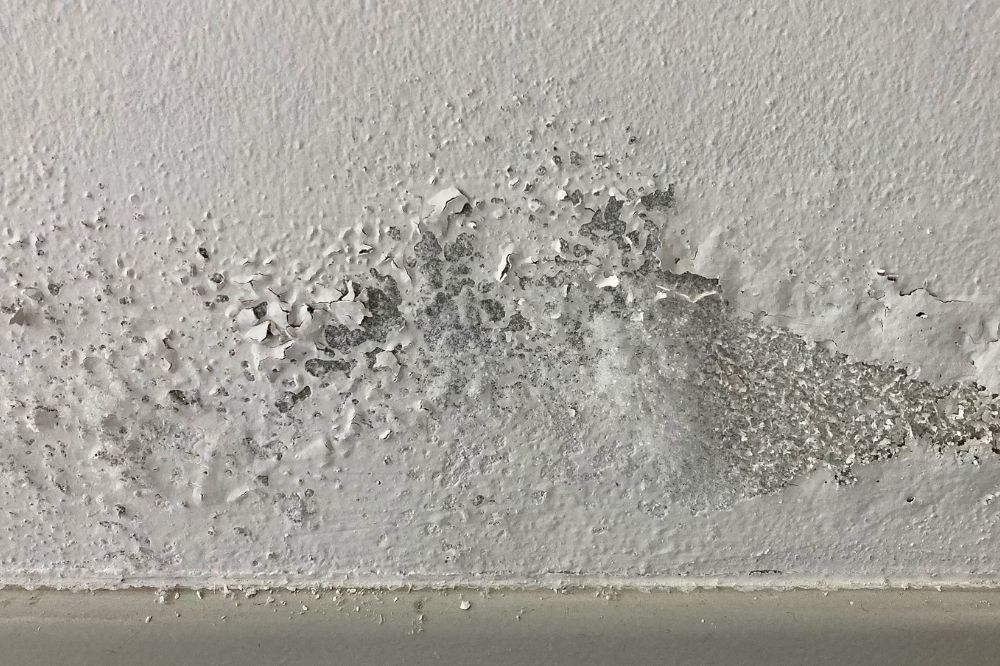

You spot a dark patch on the bathroom ceiling or the bottom of a closet wall. You grab the bleach spray, and within a few minutes the stain fades to almost nothing.
It looks handled. Then, three or four weeks later, the same patch is back in the same spot, sometimes bigger.
That isn’t bad luck. Bleach was never the right tool for mold on drywall or wood, and knowing why saves you from scrubbing the same wall every month.
What Bleach Really Does to Mold
Chlorine bleach is a whitener. When you spray it on a mold stain, the color lightens fast, so the wall looks clean even when the growth is still there.
That’s why the EPA says using a biocide such as chlorine bleach is not recommended as a routine practice during mold cleanup.
The same guidance points out that dead mold can still cause allergic reactions in some people. Killing it isn’t enough. It has to be physically removed.
Why Drywall and Wood Are a Different Problem
Tile, glass, and sealed countertops are hard and non-porous. Mold sits on top, and you can wipe it off.
Drywall and wood work differently. Drywall has a paper face over a gypsum core, and wood is full of fibers and tiny gaps.
The EPA notes that mold can grow on or fill in the spaces and crevices of porous materials. It also says moldy porous materials like ceiling tiles and carpet may have to be thrown away, because the mold can be hard or impossible to remove completely.
You’re Adding Water to the Problem
Even the CDC, which does list bleach as an option, limits that advice to hard surfaces and a mix of no more than 1 cup of bleach per gallon of water.
Do the math on that mix, and it’s almost all water. Soak a drywall patch with it, and you’ve given a porous, paper-faced surface a fresh drink of the one thing mold needs most.
The Real Reason Mold Keeps Coming Back
Mold returns because the moisture behind it never left. As the CDC notes, mold will grow back wherever the moisture problem remains.
Common sources in Denver homes include:
- A slow leak from a supply line, drain or toilet seal inside the wall
- Bathroom steam with no working exhaust fan, or a fan that dumps into the attic
- Winter window condensation running down onto sills and wall returns
- Basement walls that pick up moisture during spring snowmelt
- Old water damage that was patched and painted without being dried out
Until you find and fix that source, any cleaning method is temporary. Bleach just makes the temporary part look more convincing.
What Actually Works on Drywall and Wood
Hard, Non-Porous Surfaces
On tile, glass, metal, vinyl, and sealed counters, scrub with soap and water or a household cleaner, then dry the area completely. A diluted bleach solution is fine here if you prefer it.
Painted or Sealed Wood
Small surface spots on painted trim or sealed wood can usually be scrubbed off with detergent and water, then dried. If the wood is soft, or the staining runs deep into the grain, that section needs to be replaced.
Drywall
Light surface growth on painted drywall can sometimes be cleaned. Once the paper face is stained through, soft, or crumbling, the affected piece usually has to be cut out and replaced.
Look inside the wall cavity while it’s open. The back side of drywall is one of the places the EPA says mold often hides.
Know When It’s Too Big for a DIY Job
The EPA’s rule of thumb is that most people can handle a moldy area smaller than about 10 square feet. That’s roughly a 3-by-3-foot patch.
Anything bigger, anything caused by sewage or contaminated water, or anything inside a wall or HVAC system calls for more than a spray bottle.
Stay Safe If You Do Clean It Yourself
- Never mix bleach with ammonia or other cleaners, because the combination gives off toxic gas
- Open windows and doors to get fresh air moving while you work
- Wear gloves, goggles, and an N-95 respirator, which the EPA lists as basic protection for mold cleanup
- Bag moldy materials before carrying them through the house
When to Bring In a Professional
Some situations go beyond what household cleaning can fix:
- The mold keeps coming back no matter how you clean it
- The patch is larger than about 10 square feet
- There’s a musty smell, but you can’t find where it’s coming from
- The drywall or wood is soft, stained through, or crumbling
- The mold followed a leak, flood, or sewer backup
In those cases, professional Mold Removal Services from an IICRC-certified team in the Denver area deal with containment, removing the damaged material and drying the structure, so the moisture problem gets fixed along with the mold.
Put the Bleach Down and Find the Water
Bleach can make a moldy wall look better for a few weeks. On drywall and wood, it doesn’t remove the growth or fix the reason it showed up.
Clean small spots the right way, replace what’s too far gone, and track down the moisture. Do that, and you won’t be repainting the same corner every spring.
What You Need to Know
- Bleach is ineffective for mold on drywall and wood because it only whitens the stain without removing the mold itself.
- The EPA advises against using chlorine bleach as a routine practice during mold cleanup, as dead mold can still cause allergic reactions.
- Mold returns primarily due to persistent moisture behind it, which must be addressed for effective mold removal.
- For drywall and wood, areas with deep staining or soft material usually require replacement rather than simple cleaning.
- Most individuals should handle mold patches smaller than about 10 square feet; larger areas or those involving sewage require professional assistance.
- When cleaning mold, safety precautions include wearing gloves, goggles, and an N-95 respirator, as well as ensuring adequate ventilation.