
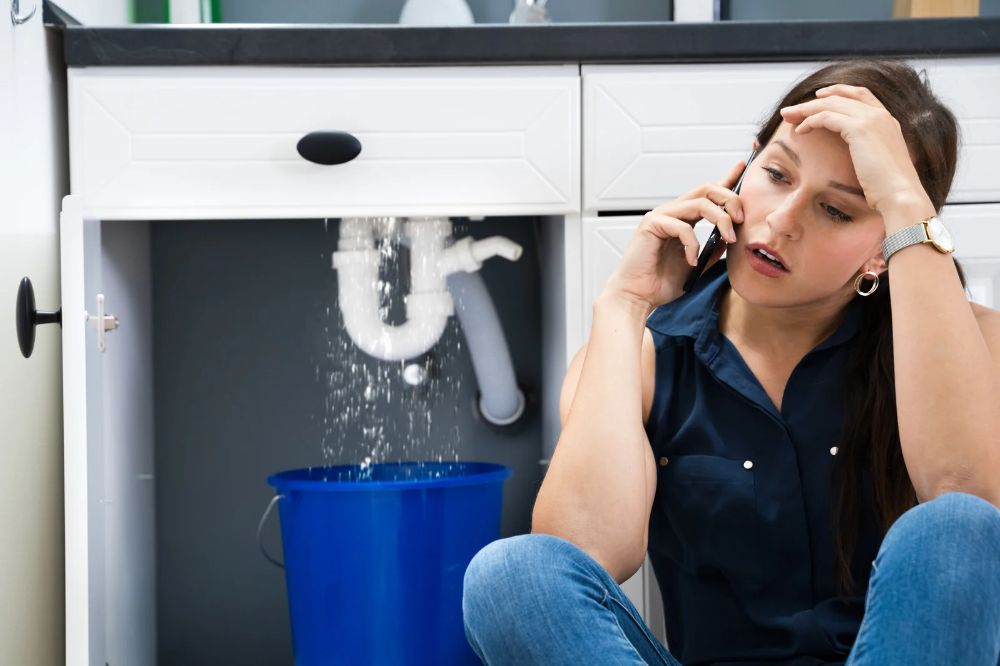

It’s 6:40 on a Tuesday morning. The owner in 2B finds a brown ring spreading across the bathroom ceiling, and the drip has already reached the vanity.
Everyone in the building agrees someone should call a restoration company. Nobody agrees on who should do it, and condo water losses usually get expensive during that pause.
The first call goes to whoever can stop the water
Responsibility can wait. The water can’t. If the 3B owner is home, they should close the shutoff under the sink, behind the toilet, or at the water heater.
If 3B is empty, the property manager or board usually has a key or knows where the building shutoff is. Downstairs neighbors should call the manager first and then knock on 3B’s door.
The clock matters more than the paperwork. The EPA says water-damaged areas should be dried within 24 to 48 hours to prevent mold, and a slow phone tree can use up that window fast.
Where the leak starts decides who takes charge
California condos run under the Davis-Stirling Act. Civil Code Section 4775 sets the default split of repair duties, and your CC&Rs can change it.
Leaks that start inside Unit 3B
Say the source is inside the unit: a failed supply line, a cracked toilet tank, a leaking dishwasher. By default, that repair belongs to the 3B owner.
So in most cases the 3B owner, or their HO-6 insurer, arranges the restoration work inside 3B.
Leaks that start in the common area
Pipes in shared walls, roof drains, and building risers are usually common area. The association repairs and maintains the common area unless the CC&Rs say otherwise.
When the leak starts there, the manager or board usually makes the call. Balconies and patios that serve one unit follow a middle rule: the owner maintains them, and the association repairs and replaces them.
The 2025 utility rule
SB 900 took effect January 1, 2025. When water, gas, heat or electric service is cut off by a problem that starts in the common area, the association now owns that repair, even if the problem reaches into a unit.
The board has to start the repair process within 14 days. The rule doesn’t apply when the CC&Rs put that repair on the owner, or when a utility provider maintains the line.
Who calls and who pays are related questions, but they’re separate. If the bill is your next worry, this guide to how California splits the repair bill when a leak crosses units covers the insurance side.
Why more than one owner may need to sign
A leak from 3B rarely stays in 3B. Water runs down into 2B, sometimes 1B, and soaks drywall, cabinets and flooring that belong to different owners and to the association.
A restoration crew needs permission from whoever controls each space. One leak can mean three work authorizations: one from 3B, one from 2B, and one from the HOA for shared walls and ceilings.
Signing first doesn’t make you the one at fault. The signature only lets the drying start. The cause and the governing documents decide who ends up paying.
A simple order of calls for condo owners
- Stop the water, or call whoever can.
- Call the property manager or HOA, even if the leak seems to come from your own unit.
- Photograph the source, ceilings, floors, and damaged belongings.
- Call your HO-6 insurer to open a claim.
- Authorize a restoration company to start work in your unit.
Settle these before the next leak
Buildings that handle leaks well usually worked out the hard parts ahead of time. At the next board meeting, ask whether the association has an after-hours water vendor on file.
Ask who holds entry contacts for empty units, and who knows where the riser shutoffs are. Three minutes saved at 6:40 a.m. can mean one ruined ceiling instead of three.
Read the association’s insurance summary too. Civil Code 5300 requires the annual budget report to list each policy’s insurer, limits and deductible, so you can see what your HO-6 has to cover.
One more detail catches owners off guard. If repairs in the association’s area force you out for a few days, Section 4775 puts the temporary relocation cost on you, so check whether your HO-6 includes loss-of-use coverage.
The short answer
Leaks that start inside 3B are 3B’s call. Leaks in the walls, roof or risers are the association’s call.
Everyone downstairs should call the manager right away and not wait for fault to be settled. Drying can start while the paperwork catches up.
10) cwgmagazine.com
What You Need to Know
- The owner in unit 2B discovers a brown ring on the bathroom ceiling due to water leak from unit 3B.
- California condos operate under the Davis-Stirling Act, which governs repair responsibilities for water damage.
- If the leak originates from unit 3B, the owner of that unit or their insurance must arrange restoration work.
- SB 900 requires the HOA to start repairs within 14 days if issues arise from the common area that impact utility services.
- Multiple owners may need to authorize restoration work when water damage affects several units and shared spaces.
- Homeowners should verify if their HO-6 insurance includes loss-of-use coverage due to potential temporary relocation during repairs.
