
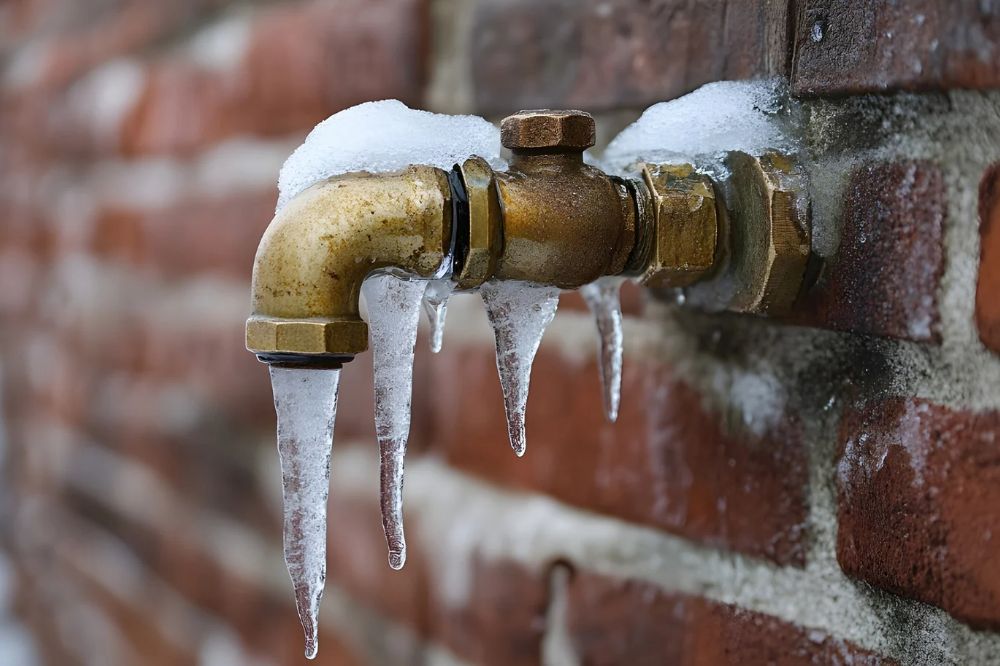

Most Middle Tennessee winters are mild enough that frozen pipes feel like someone else’s problem. Then a hard freeze settles in for a few nights.
Nashville saw how that goes. In January 2026, Metro Water Services director Scott Potter said the previous winter’s extreme cold had caused widespread pipe breaks across the city.
Most of the prevention is cheap and quick, as long as it happens before the cold arrives.
Why Pipes Burst in a Freeze
Water expands as it freezes. Inside a pipe, that expansion builds pressure the pipe can’t release, and eventually the pipe splits.
Consumer Reports says frozen pipes usually happen when temperatures fall below 20 degrees, though it isn’t unheard of above that. The biggest risk is an uninsulated pipe running through an uninsulated space.
The pipes at the most risk sit closest to the cold:
- Outdoor faucets, often called hose bibs
- Sprinkler and pool supply lines
- Pipes in unheated spaces like crawl spaces, attics and garages
- Pipes along exterior walls with little insulation
- The spot where the water line enters the house through the foundation
Start With the Outdoor Faucets
Outdoor faucets take the most exposure, so they come first.
Disconnect every hose, drain it, and store it. Even a frost-free faucet can’t drain with a hose attached, and the trapped water can freeze.
If an outdoor faucet has its own shut-off valve inside the house, close it. Then open the outdoor faucet so the line drains, and leave it open.
An insulated faucet cover adds protection on the coldest nights.
Metro Water Services also advises draining seasonal irrigation before temperatures drop. If your sprinkler system has a backflow preventer, Metro Water asks owners to protect and winterize it as well.
Protect the Pipes You Can’t See
Crawl spaces and garages
In a home built over a crawl space, supply lines run through unheated air. Close the crawl space vents in freezing weather, as Metro Water Services recommends.
Wrap exposed pipes in foam pipe sleeves or UL-listed heat tape. If water lines run through the garage, keep the garage door closed.
Clark, who owns Harper’s Handyman Services in Fairview, says the trouble spots are rarely in the middle of the house.
“Pipes fail at the edges,” he says. “It’s the hose bib on the north wall, or the line in the crawl space nobody looks at between March and November.”
Sinks on exterior walls
Kitchen and bathroom sinks on outside walls are a common weak spot. On very cold nights, open the cabinet doors so warm room air can reach the pipes.
Move cleaners and chemicals out of reach of children and pets while the doors are open.
Drafts near pipes
Cold air leaking in around a pipe can freeze it even in a heated room. Seal gaps where pipes, wires and dryer vents pass through exterior walls with caulk or foam.
What to Do the Night a Hard Freeze Hits
When the forecast calls for a deep freeze, change a few habits for the night.
- Let cold water trickle from faucets served by exposed pipes.
- Keep the thermostat at the same setting day and night instead of turning it down at bedtime.
- If you travel, leave the heat on and set it no lower than 55 degrees.
Find your shut-off valve now
If a pipe bursts, the main shut-off valve stops the flooding.
It may be in a basement, under the kitchen sink, in a utility closet, near the water heater, or in the crawl space.
Once you find it, tie a tag on it so anyone in the house can spot it fast.
Metro Water Services’ cold-weather guidance asks every customer to find that valve and test it before an emergency.
Metro Water also notes it can’t respond to private plumbing problems. A frozen or broken pipe on your side of the meter means calling your own plumber.
If a Pipe Freezes Anyway
If you turn on a faucet and only a trickle comes out, suspect a frozen pipe. Keep the faucet open so water can flow as the ice melts.
Warm the frozen section with a hair dryer, an electric heating pad, or towels soaked in hot water. Never use a torch, propane heater, or any other open flame.
Check the other faucets too. When one pipe freezes, others in the house may have frozen as well.
If you can’t find or reach the frozen section, or the pipe has split, shut off the main valve and call a licensed plumber.
An Afternoon Now Saves a Bad Night in January
Disconnecting hoses, closing a valve, and wrapping a few exposed pipes takes an afternoon. Get it done before the first hard freeze, while the weather still lets you work outside.
cwgmagazine.com
What You Need to Know
- Nashville experienced widespread pipe breaks in January 2026 due to extreme cold from the previous winter.
- Frozen pipes typically occur when temperatures fall below 20 degrees, although they can freeze at higher temperatures.
- Outdoor faucets are particularly vulnerable to freezing and should be disconnected, drained, and insulated before cold weather arrives.
- Pipes in unheated spaces such as crawl spaces and garages require extra protection, such as closing vents and wrapping with foam insulation.
- During hard freezes, homeowners should let faucets trickle to prevent freezing and maintain a consistent thermostat setting.
- If a pipe does freeze, keep the faucet open while warming the frozen section to help the ice melt, and avoid using open flames.
