
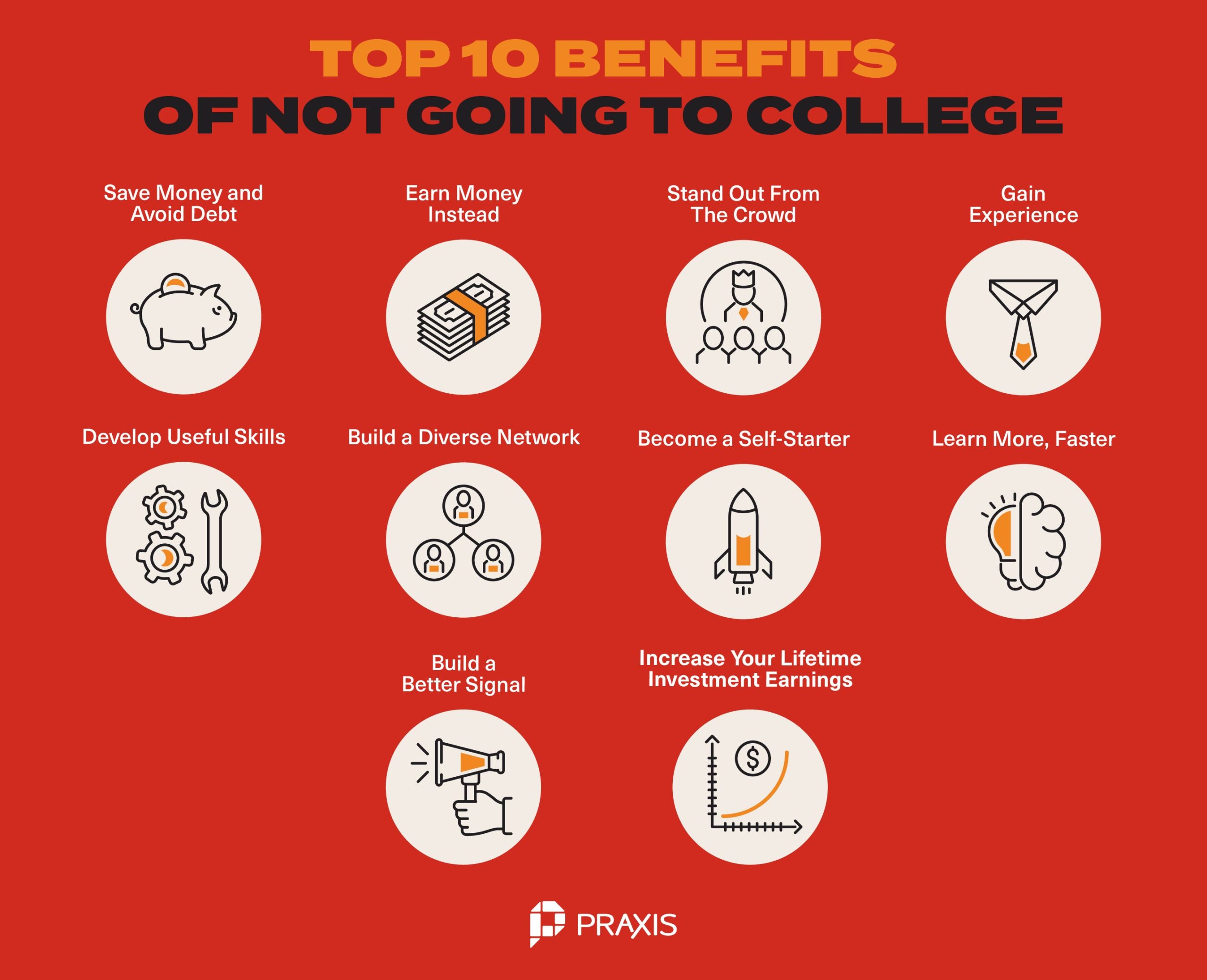

Not attending college can lead to missed opportunities, but it doesn’t mean the end of the road. Many successful individuals have thrived without a traditional college education. What happens if you don’t go to college? You may find unconventional paths to success, build practical skills, and pave your unique journey. Embracing alternative routes can open doors to entrepreneurship, vocational training, or pursuing passion projects with dedication. Remember, success is not exclusive to a college degree; it’s about ambition, determination, and seizing the opportunities that come your way.

What Happens If You Don’t Go to College?
Hey there, curious minds! Have you ever wondered what might happen if you decide not to go to college? It’s a big question with lots of different answers, so let’s dive in and explore the possibilities together.
1. Job Opportunities
One of the most immediate effects of not going to college is the impact on your job opportunities. While some jobs don’t require a college degree, many higher-paying and specialized positions do. Without a college education, you might find yourself limited in the types of jobs you can apply for.
Exploring Career Paths
There are plenty of career paths that don’t require a college degree, such as skilled trades like plumbing, carpentry, or electrician work. These professions often offer hands-on training and apprenticeships that can lead to rewarding careers.
Limited Advancement Opportunities
However, in fields like healthcare, engineering, or finance, a college degree is often a minimum requirement for entry-level positions. Without a degree, you may face challenges in advancing your career and reaching higher-paying roles.
2. Earning Potential
Another consequence of not going to college is its impact on your earning potential. Statistics show that, on average, individuals with a college degree tend to earn more over their lifetime compared to those without one.
Salary Comparison
While there are exceptions, college graduates typically command higher salaries due to their specialized knowledge and skills. This can translate into a significant difference in earning potential over the course of a career.
Financial Stability
Having a higher income can provide greater financial stability, allowing you to afford a comfortable lifestyle, save for the future, and achieve your financial goals. Without a college degree, you may find it more challenging to secure well-paying jobs that offer these benefits.
3. Personal Development
College is not just about academics; it’s also a time for personal growth and development. By attending college, you have the opportunity to expand your knowledge, gain new perspectives, and build important life skills.
Networking and Social Skills
College offers a unique environment for networking and developing social skills. You have the chance to meet people from diverse backgrounds, engage in meaningful discussions, and form lasting connections that can benefit you both personally and professionally.
Critical Thinking and Problem-Solving
Through academic challenges and real-world experiences, college helps you enhance your critical thinking and problem-solving abilities. These skills are valuable in any career and can set you apart in the job market.
4. Student Debt
One potential advantage of not going to college is avoiding student debt. College tuition fees can be expensive, and many students graduate with significant student loan debt that can take years to repay.
Financial Freedom
By forgoing college, you may be able to enter the workforce sooner and start earning money without accumulating student loans. This can provide a sense of financial freedom and independence at a younger age.
Trade-offs
However, it’s essential to consider the long-term implications of choosing not to pursue higher education. While you may avoid student debt in the short term, missing out on a college degree could impact your future earning potential and career prospects.
5. Alternative Paths
Not attending college doesn’t mean your journey ends there. There are various alternative paths you can explore to achieve success and fulfillment in your career and personal life.
Entrepreneurship
Some successful entrepreneurs have built thriving businesses without a college degree. If you have a passion or a unique idea, starting your own business could be a viable option for creating your path to success.
Online Learning and Skill Development
In today’s digital age, there are numerous online platforms offering courses and certifications in diverse fields. You can continue learning and developing your skills through online education, which can enhance your career prospects.
Community College and Vocational Training
Community colleges and vocational training programs provide opportunities for practical, hands-on learning in specialized fields. These options can lead to certifications and qualifications that open doors to fulfilling careers.
So, what happens if you don’t go to college? While not pursuing higher education can have implications on your job opportunities, earning potential, and personal development, there are alternative paths to success. Whether you choose to follow a traditional college route or explore other avenues, remember that your education journey is unique to you.
Not Going to College: What I Wish I Knew
Frequently Asked Questions
What are some potential consequences of not attending college?
Not going to college may limit your career opportunities as many employers require a degree for certain positions. Without a college degree, you might also earn lower salaries compared to those with higher education qualifications.
Can you still have a successful career without a college degree?
While it is possible to have a successful career without a college degree, the opportunities may be more limited. Some individuals have excelled through entrepreneurship, vocational training, or gaining relevant work experience in lieu of a traditional college education.
How does not attending college impact personal growth and development?
College offers more than just academic knowledge; it provides opportunities for personal growth, networking, and skill development. Without the college experience, you may miss out on building valuable life skills, expanding your perspectives, and forming important connections.
Final Thoughts
If you don’t go to college, your earning potential may be lower compared to college graduates. Without a degree, job opportunities and advancement may be limited. Additionally, you may miss out on valuable skills and knowledge that can benefit your career. Making the decision not to attend college can impact your future prospects significantly. So, consider the consequences of what happens if you don’t go to college before making a final choice.
