
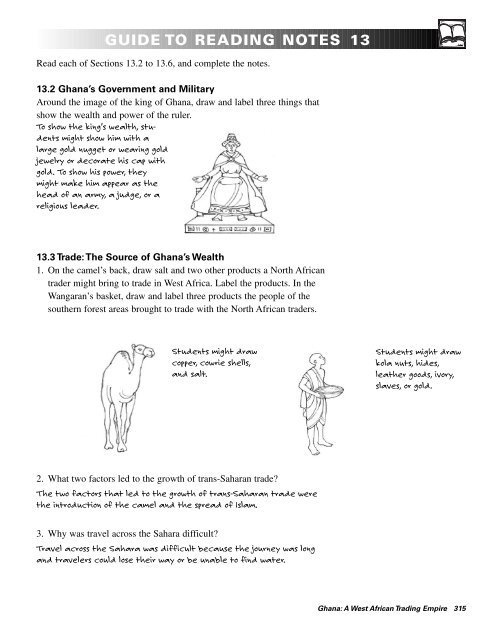

The growth of Trans-Saharan trade was driven by two key factors: geographical location and the demand for goods. The vast expanse of the Sahara Desert created a natural barrier that necessitated long-distance trade routes, fostering economic exchanges between North Africa and sub-Saharan regions. Additionally, the desire for commodities like gold, salt, and slaves fueled trade networks across the desert. These factors combined to shape a vibrant and enduring trade network that connected distant regions and cultures.

What Two Factors Led to the Growth of Trans-Saharan Trade?
Welcome, young explorers! Today, we are going on a fascinating journey back in time to uncover the two important factors that played a crucial role in the growth of Trans-Saharan trade. Imagine traveling on camels across vast deserts, meeting different people, and exchanging goods that would shape the history of Africa. Are you ready? Let’s dive in!
The Role of Geography
Let’s start our adventure by looking at the first factor that led to the growth of Trans-Saharan trade: Geography. Geography is like a giant puzzle that helps us understand how the world works. In the case of Trans-Saharan trade, the geography of the region played a significant role in connecting people from different parts of Africa and beyond.
The Sahara Desert, a massive expanse of sand and rock, may seem like an obstacle, but in reality, it became a pathway for trade. The vast desert acted as a natural barrier, separating North Africa from Sub-Saharan Africa. However, this barrier also served as a bridge, connecting traders from different regions.
Camels, known as the “ships of the desert,” played a crucial role in crossing the harsh terrain of the Sahara. These amazing creatures could go for days without water, making them perfect companions for long journeys across the desert. With the help of camels, traders could transport goods such as salt, gold, ivory, and slaves across the Sahara, opening up a world of opportunities for trade.
The Importance of Trade Routes
Now, let’s talk about the second factor that fueled the growth of Trans-Saharan trade: Trade routes. Just like how you follow a map to reach your destination, traders in ancient times relied on established trade routes to navigate the vast desert and reach their trading partners.
One of the most famous trade routes that connected North Africa to West Africa was the Trans-Saharan trade route. This route stretched across the desert, linking major cities and trading centers. Along the way, traders would stop at oases, which are like hidden gems in the desert, providing water and rest for weary travelers and their camels.
As trade flourished along these routes, thriving cities like Timbuktu, Gao, and Cairo emerged as hubs of commerce and culture. People from different regions would come together to exchange goods, ideas, and traditions, creating a vibrant tapestry of diversity along the Trans-Saharan trade routes.
So, there you have it, young adventurers! The two factors that led to the growth of Trans-Saharan trade were geography and trade routes. The vast Sahara Desert, with its challenging yet majestic landscape, served as a pathway for trade, while established trade routes connected distant regions and fostered cultural exchange.
As you continue to explore the wonders of history and geography, remember the fascinating stories of the traders and travelers who braved the desert to connect the ancient world through trade. Who knows what other mysteries and discoveries await you on your next journey through time?
Until next time, keep exploring and learning about the amazing world around you!
What is the trans-Saharan trade?
Frequently Asked Questions
What factors contributed to the growth of Trans-Saharan trade?
The expansion of Islamic empires and the introduction of camel caravans were the two main factors that led to the significant growth of Trans-Saharan trade. Islamic empires such as the Umayyad and Abbasid Caliphates promoted trade across North Africa, creating a network of trade routes. Additionally, the domestication of camels allowed for easier transportation of goods across the vast desert, facilitating increased trade between North Africa and sub-Saharan Africa.
How did the expansion of Islamic empires impact Trans-Saharan trade?
The expansion of Islamic empires played a crucial role in the growth of Trans-Saharan trade by establishing political stability and promoting commerce along the trade routes. Islamic rulers provided security for traders, encouraged cultural exchanges, and facilitated the spread of goods and ideas across the region. This conducive environment fostered economic growth and the flourishing of trade between North Africa and sub-Saharan Africa.
Why were camel caravans essential for the growth of Trans-Saharan trade?
Camel caravans were vital for the growth of Trans-Saharan trade due to the harsh desert conditions and the vast distances that needed to be covered. Camels were well-suited for desert travel as they could endure long journeys without water and carry heavy loads of goods. The introduction of camel caravans revolutionized trade in the region, making it more efficient, reliable, and cost-effective, thereby facilitating the expansion of commercial activities between North Africa and sub-Saharan Africa.
Final Thoughts
The growth of Trans-Saharan trade was spurred by two key factors. Firstly, the introduction of the camel as a mode of transport enabled traders to traverse the desert efficiently, expanding trade routes. Secondly, the demand for valuable goods such as gold, salt, and slaves drove the exchange of commodities across the vast Sahara desert. These two factors—camel transport and demand for goods—were instrumental in fostering the growth of Trans-Saharan trade.
