

The call usually comes at a bad time. Mom says there’s water on the kitchen floor, or the neighbor downstairs says it’s coming through their ceiling.
You can’t drive over and look. What you can do is make a handful of calls in the right order, so the damage stops spreading while you manage things from a distance.
Step 1. Make Sure Your Parent Is Safe
Ask whether the water is near outlets, cords or appliances. If it is, your parent should stay out of that room and leave the electrical panel alone.
If they’re unsteady on their feet, a wet tile floor is its own hazard. It may be safer for them to wait at a neighbor’s unit or in the lobby.
Step 2. Get the Water Shut Off
Most condo units have a shutoff valve under the sink, behind the toilet, or near the water heater. Walk your parent through finding it over a video call.
If the leak is coming from a neighbor’s unit or a shared pipe, the shutoff may be out of their reach. Call the building manager, maintenance line, or association’s emergency number next.
Step 3. Get Someone You Trust On-Site
You need eyes in the unit. A trusted neighbor, the building manager, or a family friend can open doors for contractors and send you photos.
Ask your parent to tell the association that this person is allowed to act for the family. That saves time when crews need access to the unit.
Step 4. Document Everything Before Cleanup
Have your helper record a slow video of every wet room, including ceilings, baseboards and the inside of cabinets. Photos of the source, like a burst supply line or a stained ceiling, matter most.
Keep a simple log with the date, time, who you spoke to and what they said. Insurance adjusters and association boards both ask for this later.
Step 5. Start Drying Within a Day or Two
Speed matters more than almost anything else here. The EPA says water-damaged areas should be dried within 24 to 48 hours to prevent mold.
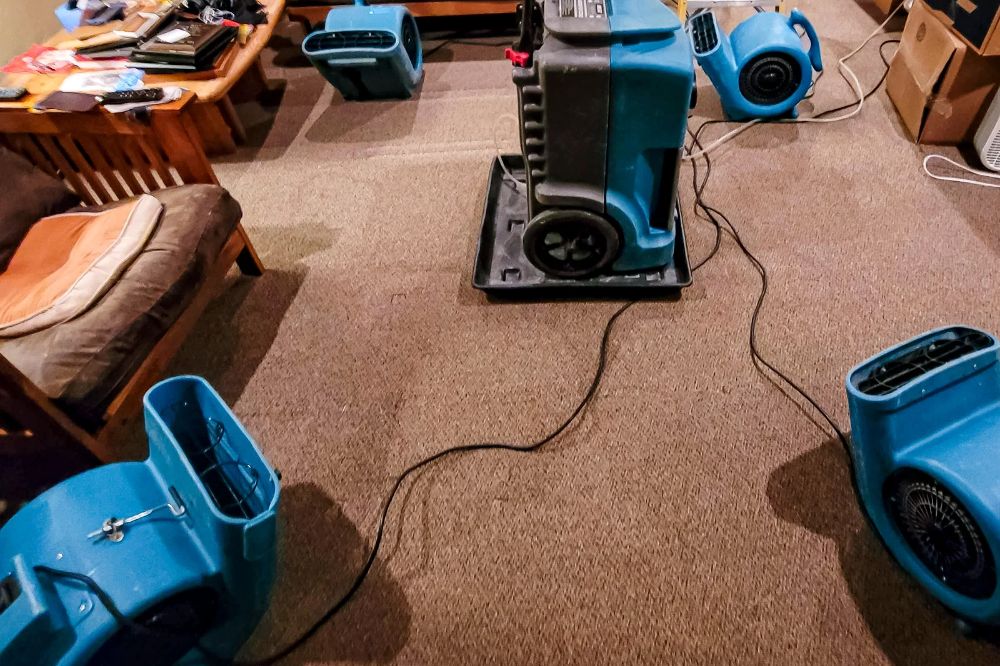
A towel and a box fan won’t reach water trapped under flooring or inside walls. A professional restoration crew uses moisture meters to find it and dries the unit with commercial equipment.
“Families calling from out of state often wait until they can fly down, and by then the drywall has soaked up water from the floor,” says Cesar Hernandez Jr. of BuildEase by Florida Mitigation Group.
“If someone can let a crew in on the first day, most of that damage never happens.”
Step 6. Figure Out Who Is Responsible
In a condo, the association and the unit owner usually split the repairs. The building’s documents decide much of it, and in Florida so does the law.
Under Florida’s condominium insurance statute, the association’s policy covers the building as originally installed. It excludes things inside the unit like floor and wall coverings, appliances, water heaters, and cabinets.
Those items fall to the unit owner and their own policy, usually an HO-6. If the leak came from a neighbor’s negligence, that owner may be responsible for repairs insurance doesn’t cover.
Step 7. Call Your Parent’s Insurance Company
Find the policy number, then call with your parent on the line so the insurer can confirm you’re allowed to help. Ask them to add you as an authorized contact for the claim.
Florida gives policyholders one year from the date of loss to report a new property claim. Waiting that long is a mistake, though, since a late report makes the damage harder to prove.
Step 8. Keep Your Parent in the Loop
It’s easy to take over and forget that it’s still their home. Share each update, ask before you approve work, and keep copies of every estimate and invoice.
If repairs will take weeks, check whether the policy covers a short stay elsewhere. Many policies include additional living expenses when a home can’t be lived in.
Quick Checklist
- Your parent is safe and out of any wet room near electricity
- The water is shut off at the unit or by building staff
- A trusted person can let crews into the unit
- Every wet area is photographed and on video
- Drying has started within 24 to 48 hours
- The association has been notified in writing
- The insurer has a claim number, and you’re listed as a contact
- You have copies of every estimate, invoice, and email
Plan for Next Time
Once things settle, put together a short emergency sheet for the unit. Include the shutoff valve location, the manager’s number, the policy number, and a neighbor who has a key.
Keep a copy yourself and tape one inside a kitchen cabinet. The next call will still come at a bad time, but it’ll be a much shorter one.
mynews-magazine.com
What You Need to Know
- Ensure your parent is safe and away from any wet areas near electricity.
- Shut off the water immediately, either through a valve in the unit or by contacting building management.
- Document all damage thoroughly with photos and videos before any cleanup begins.
- Drying out water-damaged areas within 24 to 48 hours is crucial to prevent mold growth.
- In Florida, the condominium association typically covers the building’s structure, while unit owners are responsible for interior repairs and personal belongings.
- Notify the insurance company promptly to report the claim and confirm authorized contacts for assistance.
